
Grizzly Energy Budget (A Math + Ecology Combo)
Grizzlies are perfect for an “energy budget” lesson because their whole life is about gaining enough calories to survive winter and reproduce.
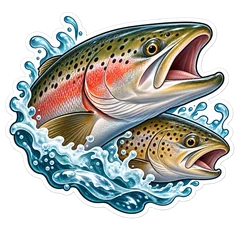 Fish & rivers
- Print & go
Grizzlies are perfect for an “energy budget” lesson because their whole life is about gaining enough calories to survive winter and reproduce.
Activity idea
Give student groups a “season card” and an “energy goal.”
- Goal: build 100 energy points before winter
- Food cards: berries, insects, roots, small mammals, scavenged meat, fish (depending on region)
- Each food type has a different energy value + time cost + risk cost
- Which foods are worth the effort?
- How does habitat change the menu?
- What happens when humans accidentally provide food (garbage, pet food, unsecured attractants)?
- How does that shift bear behavior and risk?
Students will discover the big truth on their own:
the easiest calories are often the most dangerous calories.
Questions to ask
- Which foods are worth the effort?
- How does habitat change the menu?
- What happens when humans accidentally provide food (garbage, pet food, unsecured attractants)?
- How does that shift bear behavior and risk?
Where it comes from
In the American imagination, the grizzly isn’t just a bear.
It’s weather.
It’s the sound a forest makes when something big is moving through it. It’s claw marks on a tree that feel like a sentence you’re not supposed to read out loud. And it’s a reminder that the wild isn’t a theme, it’s a living system with teeth, rules, and real consequences.
Read the blog post ↗ Grizzly Bears in America: The Power Animal That Still Shapes the Map · 2026-01-28
Workspace
Run it with your class
Set up the class, count what needs counting, write down what happened, then save it and take it with you. Everything here stays in this browser until you download it.
The class
Counters
Results table
Notes as you go
This activity has no numbered steps, so use the notes box.
Answers to the questions
Activities like this one
Sleep, Torpor, or Offline?
This quick sorting activity helps students replace the cartoon version of hibernation with real physiology.
 Bears
Print & go
Run ✓
Remove the Invitation Attractant Audit
Turn peak conflict month into a problem-solving lesson. Students become wildlife planners looking for attractants in three places: a backyard, an orchard, and a campsite.
Bears
4 steps · Print & go
Run ✓
The Bear Pantry Map
Turn berry season and mast crops into a map-based investigation. Students will see how food availability shapes movement and survival.
Bears
5 steps · Kit needed
Run ✓