
Habitat Edge Audit: Where Could an Owl Live Here?
This is a March-perfect activity because it turns your students into ecological map readers.
- Print & go
- 5 steps
Edges are where the action is.
This is a March-perfect activity because it turns your students into ecological map readers.
Students identify and color-code:
- trees/woods
- open grass/fields
- water/creek/drainage
- buildings/barns (if present)
- parks/greenways
- brushy strips/fence lines
Where two habitats touch, trace the edge line. Students quickly see:
we’re surrounded by borders.
Give each group an owl card (Barn Owl, Barred Owl, Great Horned Owl, Screech-Owl). They must choose:
- one likely calling perch
- one likely hunting lane
- one likely “risk zone” (lights, traffic, noise)
Claim: “The best edge for ___ owl is ___.”
Evidence: 3 reasons (cover, prey routes, perch access, sound/visibility).
Reasoning: Connect edge features to owl behavior.
Examples:
- reduce night lighting near a corridor
- keep a brushy strip instead of mowing to the fence
- protect a tree line or snag
- add a nest box in the right habitat (species-dependent)
Now it’s ecology + responsibility, not just identification.
Questions to ask
- What one change would make this edge more owl-friendly?
Where it comes from
If you want to find owls in March, don’t just look for “the forest.”
Look for the border of the forest.
Read the blog post ↗ March “Edge Ecology”: Why Owls Love Borders · 2026-03-02
Workspace
Run it with your class
Set up the class, count what needs counting, write down what happened, then save it and take it with you. Everything here stays in this browser until you download it.
The class
Counters
Results table
Notes as you go
Answers to the questions
Activities like this one
Build the Wildlife Starting Lineup
Turn the question into a low-prep debate and sorting activity.
 Bees & pollinators
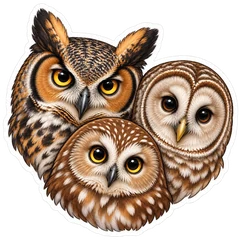 Owls
5 steps · Print & go
Run ✓
Apex Matchup Cards
Then give them scenario cards and ask them to decide who has the advantage, and why.
 Hawks, eagles & falconsOwls
Print & go
Run ✓
Can Owls and Bats Smile
For each image, students do two columns:
Owls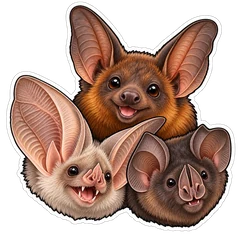 Bats
Kit needed
Run ✓