
Sound vs. Sight Experiment
Turn your classroom into a mini sound lab, and let students feel what noise pollution does.
- No prep
- 6 steps
Turn your classroom into a mini sound lab, and let students feel what noise pollution does.
Track results:
- How many correct directions out of 10 tries?
Repeat the same steps, but add a constant background sound (fan or low music).
The reflection question (the real lesson)
“If the only way you find food is by listening… what happens when the world gets louder?”
Questions to ask
- Did accuracy drop?
- Did the “owl” hesitate more?
- Did the “owl” need louder prey sounds to succeed?
Where it comes from
Winter looks still.
But it isn’t empty.
It’s just running on a different sense.
When leaves are gone and snow flattens the landscape, animals don’t get many second chances. Food is harder to find. Energy is expensive. Nights are long. And for a hunter like a Barn Owl, winter becomes a test of one thing:
Read the blog post ↗ Sound Is a Habitat: Why Quiet Matters More in Winter · 2026-01-07
Workspace
Run it with your class
Set up the class, count what needs counting, write down what happened, then save it and take it with you. Everything here stays in this browser until you download it.
The class
Counters
Results table
Notes as you go
Answers to the questions
Activities like this one
Would This Owl Stay? Resource Map
Give students a simple map of a farm, park, forest edge, or schoolyard. Add summer resource cards and let them decide whether an owl would likely stay, shift, or leave.
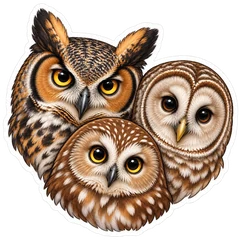 Owls
5 steps · Kit needed
Run ✓
Owl School Report Cards
This activity turns back-to-school energy into animal development science.
Owls
1 steps · Kit needed
Run ✓
Build the Wildlife Starting Lineup
Turn the question into a low-prep debate and sorting activity.
 Bees & pollinatorsOwls
5 steps · Print & go
Run ✓