
Summer Picnic Reverse Pellet Lab
This activity turns owl pellets into a playful summer food-web mystery. The twist? Students are not just asking, “What did the barn owl eat?” They are also building the “Nope, Not Dinner” side of the…
- Kit needed
- 3 steps
every good food web has a “not on the menu” list.
This activity turns owl pellets into a playful summer food-web mystery. The twist? Students are not just asking, “What did the barn owl eat?” They are also building the “Nope, Not Dinner” side of the menu.
Paper plates or trays
Gloves and handwashing supplies
Summer “picnic cards” with foods and animals
Make the picnic cards
Likely prey: vole, mouse, shrew, small rat.
Possible but less common: small bird, large insect.
Usually not: watermelon, corn, sunflower seeds, berries, chips, hot dog, frog-shaped candy, rabbit, fish, pet food.
Students open one pellet and sort bones carefully.
They identify prey clues using skulls, jaws, or teeth.
They record only what the pellet actually supports.
Barn Owl Ate This: items supported by pellet evidence.
Barn Owl Would Usually Not Eat This: items that do not fit barn owl hunting or digestion.
Need More Evidence: items that might be possible, but not proven.
Give each group five silly picnic cards and ask them to defend every placement. They must use this sentence frame:
“We placed ___ in the ___ category because the evidence shows ___.”
Then let groups trade cards and challenge each other. Is a berry in the pellet? No. Could a mouse eat berries? Maybe. Could the barn owl eat the mouse? Yes.
Suddenly, students are not just sorting foods. They are building a food web chain.
Questions to ask
- Students are not just asking, “What did the barn owl eat?
- Is a berry in the pellet?
- Could a mouse eat berries?
Where it comes from
Picture a barn owl floating over a summer field after sunset. The grass is warm. Crickets are calling. Mice and voles are moving through tunnels of stems like tiny commuters in a hidden city. The barn owl is hungry. But it is not looking for watermelon. It is not looking for sunflower seeds.
It is not swooping down for corn, berries, hot dogs, or picnic crumbs. That sounds obvious… until students start asking the best question: How do we know what a barn owl would not eat?
Read the blog post ↗ Barn Owl Menu Mysteries: What Wouldn’t a Barn Owl Eat? · 2026-06-24
Workspace
Run it with your class
Set up the class, count what needs counting, write down what happened, then save it and take it with you. Everything here stays in this browser until you download it.
The class
Counters
Results table
Notes as you go
Answers to the questions
Activities like this one
The Thankful Food Web
Have each student choose a role in the ecosystem, seed, mouse, owl, farmer, and write a short “thank you” from their perspective.
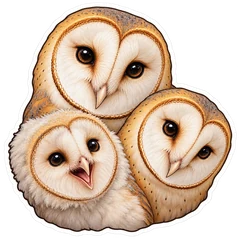 Barn owls
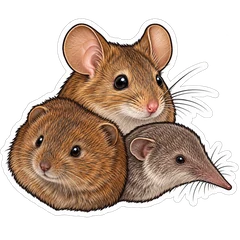 Small mammals & prey
Kit needed
Run ✓
The Harvest Food Web
Encourage students to build a “Food Web of Thanks.” Start with the grain crops planted in spring. Add rodents that feed on leftover seeds. Then, connect Barn Owls as the natural pest control layer…
Small mammals & preyBarn owls
Kit needed
Run ✓
Map the Menu
Bonus: Ask students to include a “confidence level” (high/medium/low) and explain what additional evidence they’d want.
Small mammals & preyBarn owls
No prep
Run ✓