
Build the 3-Layer Winter Web (Above / On / Under)
This is a high-impact activity because it turns “food web” from a flat diagram into something students can see as a system .
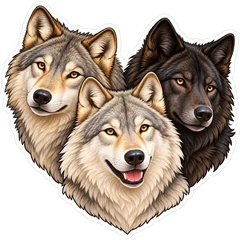 Wolves
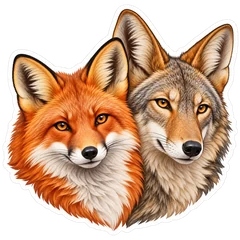 Foxes & coyotes
- Kit needed
- 4 steps
This is a high-impact activity because it turns “food web” from a flat diagram into something students can see as a system.
- Above Snow
- On Snow
- Under Snow
Under Snow: vole, mouse, shrew, seeds/grass
On Snow: rabbit, deer, fox
Above Snow: barn owl, great horned owl, hawk, coyote
- Seeds/grass → vole/mouse
- Vole/mouse → owl
- Rabbit → owl / fox
- Mouse → fox
- Deer (carcass) → scavengers (optional)
- “Deep snow this week”
- “Icy crust on top”
- “No perches near the field”
- “Rodent numbers drop”
- “A packed human trail appears”
This is where students stop memorizing and start reasoning.
Questions to ask
- Which connections weaken?
- Which predators struggle?
- Which animals shift layers?
Where it comes from
A fresh snowfall can trick us into thinking everything paused.
But snow doesn’t erase life, it reorganizes it.
It acts like a blanket and a ceiling at the same time, creating a hidden world underneath and a brand-new “map” on top. Suddenly, ecosystems aren’t just horizontal (forest to field). They’re vertical.
Read the blog post ↗ Winter Food Webs: The Snow Layer That Connects Everything · 2026-01-09
Workspace
Run it with your class
Set up the class, count what needs counting, write down what happened, then save it and take it with you. Everything here stays in this browser until you download it.
The class
Counters
Results table
Notes as you go
Answers to the questions
Activities like this one
Build the Owl Barbecue Menu
Turn the holiday idea into a simple food web activity.
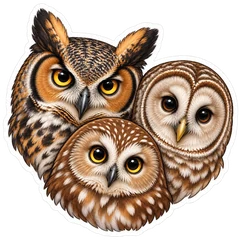 Owls
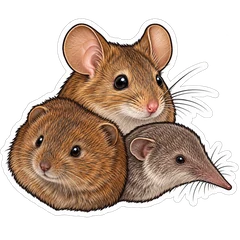 Small mammals & prey
Kit needed
Run ✓
Storytime Sleuths (Campfire Version)
Here is the full activity in a camp-friendly format. It works as a science station, writing workshop, rainy-day program, or evening campfire share.
OwlsSmall mammals & prey
6 steps · Kit needed
Run ✓
Pellet Data Detectives
Turn owl pellet study into a biodiversity investigation, not just a dissection.
OwlsSmall mammals & prey
Kit needed
Run ✓