
Pellet Data Detectives
Turn owl pellet study into a biodiversity investigation, not just a dissection.
- Kit needed
pellets help scientists and conservationists monitor biodiversity, track small mammal populations, and understand ecosystem health.
Turn owl pellet study into a biodiversity investigation, not just a dissection.
Give students either real sterilized pellets or prepared pellet data cards. Each group becomes a team of Pellet Data Detectives trying to answer this question:
What does this owl’s diet tell us about the local ecosystem?
Students should record:
| Evidence Found | What It Might Mean |
|---|---|
| Several vole skulls | Voles may be common in the area |
| Mouse and shrew remains | Habitat may support multiple small mammal species |
| Mostly one prey species | The owl may be specializing, or the habitat may have lower diversity |
| Insect parts | Owl may be hunting smaller prey or feeding in insect-rich habitat |
| Bird bones | Prey availability or hunting behavior may vary by season |
Then have students calculate a simple biodiversity score:
- 1 point for each prey type found
- Bonus point if they find evidence of more than one animal group, such as mammals and insects
- Discussion point if one prey type dominates the pellet
The goal is not to make students “prove” ecosystem health from one pellet. The goal is to teach them that pellets are evidence, and evidence becomes stronger when we compare more samples across time and place.
Final Detective Questions
- What prey species were most common?
- What does that suggest about the habitat?
- Would one pellet be enough evidence? Why or why not?
- What might change if we collected pellets in another season?
- How could this help conservationists monitor biodiversity?
This shifts the activity from “What bones did we find?” to “What story does the food web tell?”
Questions to ask
- What prey species were most common?
- What does that suggest about the habitat?
- Would one pellet be enough evidence?
- Why or why not?
Where it comes from
Most of the important work happens while we are asleep.
A barn owl glides over a field. A mouse moves under dry grass. A vole freezes beside a fence line. Somewhere in the dark, a silent predator hears what we would never notice.
Read the blog post ↗ Pellets, Biodiversity & Ecosystems · 2026-05-22
Workspace
Run it with your class
Set up the class, count what needs counting, write down what happened, then save it and take it with you. Everything here stays in this browser until you download it.
The class
Counters
Results table
Notes as you go
This activity has no numbered steps, so use the notes box.
Answers to the questions
Activities like this one
Storytime Sleuths (Campfire Version)
Here is the full activity in a camp-friendly format. It works as a science station, writing workshop, rainy-day program, or evening campfire share.
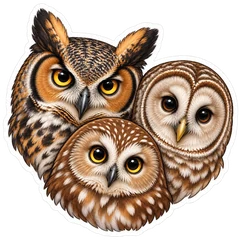 Owls
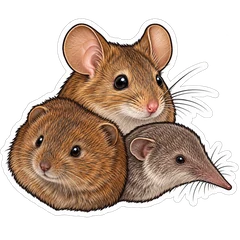 Small mammals & prey
6 steps · Kit needed
Run ✓
Activity: Confidence Scoring on IDs
This is a simple upgrade that instantly improves student thinking and writing.
OwlsSmall mammals & prey
1 steps · Kit needed
Run ✓
What Is That “Worm” on My Pellet?
This activity teaches why sterilization matters, without suggesting any classroom pellet problems. It frames the idea correctly: in nature pellets can be used by recyclers; in classrooms we sterilize…
Owls Bees & pollinators
1 steps · Print & go
Run ✓