
Owl Eye Color Time Lab
Turn the classroom into a mini wildlife investigation lab. Instead of simply sorting owl photos by eye color, students become field biologists trying to predict when each owl hunts.
- Print & go
the eyes give clues.
Turn the classroom into a mini wildlife investigation lab. Instead of simply sorting owl photos by eye color, students become field biologists trying to predict when each owl hunts.
Set up three “time zones” around the room:
- Day Shift
- Twilight Shift
- Night Shift
Give each group an owl card with an image and a few clues. Do not tell students the owl’s hunting time right away.
Each card should include:
- Eye color: yellow, orange, or dark brown/black
- Habitat clue: open grassland, forest edge, barn, desert, woodland, wetland
- Prey clue: insects, rodents, birds, reptiles, fish
- Behavior clue: perches silently, hunts near burrows, glides over fields, waits at forest edges
Students must place their owl in one of the three time zones and defend their decision with evidence.
Example Owl Cards
| Owl Clue Card | Student Prediction | Evidence |
|---|---|---|
| Yellow eyes, open grassland, often seen near burrows, eats insects and small mammals | Day Shift | Yellow eyes + open habitat + visible activity |
| Orange eyes, forest edge, large predator, active when shadows are long | Twilight Shift | Orange eyes + dawn/dusk hunting window |
| Dark eyes, barn or open field, hunts rodents using sound | Night Shift | Dark eyes + strong hearing + nocturnal prey |
After each group presents, reveal the general pattern:
- Yellow eyes often suggest daytime activity
- Orange eyes often suggest dawn/dusk activity
- Dark brown or black eyes often suggest night hunting
Then add the scientist twist: students must revise their answers if needed and mark their confidence level.
Use a simple confidence scale:
- High confidence: eye color, habitat, prey, and behavior all match.
- Medium confidence: most clues match, but one clue is unclear.
- Low confidence: eye color gives a clue, but more evidence is needed.
Where it comes from
An owl’s eyes are hard to ignore. Some glow bright yellow, like little lanterns. Some burn orange, like sunset caught in feathers. Others are deep dark brown or almost black, built for the quiet hours when the world is nearly lightless.
But owl eye color is not just for looks. In many owl species, eye color can give us a clue about when that owl is most active. Not a perfect rule. Not a magic code. But a useful wildlife pattern students can learn to read.
Read the blog post ↗ Decoding Owl Eye Color: What Yellow, Orange, and Dark Eyes Can Tell Us · 2026-05-18
Workspace
Run it with your class
Set up the class, count what needs counting, write down what happened, then save it and take it with you. Everything here stays in this browser until you download it.
The class
Counters
Results table
Notes as you go
This activity has no numbered steps, so use the notes box.
Activities like this one
Would This Owl Stay? Resource Map
Give students a simple map of a farm, park, forest edge, or schoolyard. Add summer resource cards and let them decide whether an owl would likely stay, shift, or leave.
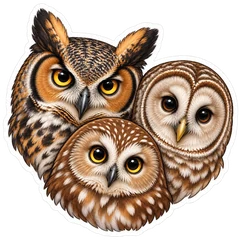 Owls
5 steps · Kit needed
Run ✓
Owl School Report Cards
This activity turns back-to-school energy into animal development science.
Owls
1 steps · Kit needed
Run ✓
Pack, Colony, Pair, or Solo?
Here is a simple classroom activity that helps students compare social behavior without mixing up the terms.
 Wolves
 Bats
Print & go
Run ✓