
What Is That “Worm” on My Pellet?
This activity teaches why sterilization matters, without suggesting any classroom pellet problems. It frames the idea correctly: in nature pellets can be used by recyclers; in classrooms we sterilize…
 Bees & pollinators
- Print & go
- 1 steps
Activity: “Close the Cafeteria” (Sterilization Stops the Chain)
This activity teaches why sterilization matters, without suggesting any classroom pellet problems. It frames the idea correctly: in nature pellets can be used by recyclers; in classrooms we sterilize so the pellet stays evidence.
Grade Level
Grades 3, 8 (easy to simplify for 2, 3 or extend for 6, 8)
Time
15, 25 minutes
Objective
Students model how sterilization stops decomposition/consumer pathways, keeping a pellet as evidence instead of becoming habitat.
Prep: Make Simple Cards
Write one term per card (you can add simple drawings if you want):
- Owl (predator)
- Mouse/Vole/Shrew (prey)
- Pellet (fur + bones)
- Recyclers (label as “tiny consumers/decomposers”: moth larvae, beetles, fungi, bacteria)
- Sterilization (OBDK step)
- Classroom (lab)
- Optional cards: Habitat, Evidence, Food Web, Time
2. Ask: “In nature, what happens when organic material sits around?”
Students add: Recyclers → break down fur/feathers
Now your chain looks like:
Owl → Prey → Pellet → Recyclers
3. Introduce the Sterilization card and place it between pellet and recyclers:
Owl → Prey → Pellet → Sterilization → Classroom
Say (teacher-safe, confidence-building):
“Sterilization closes the cafeteria. The pellet stays evidence for learning.”
4. Discussion prompts (quick but powerful):
- What does sterilization remove from the system?
- What remains? (bones + evidence)
- Why is that important in a classroom?
Optional Extension: CER Mini-Write (5 minutes)
Claim: Sterilization changes what happens to a pellet over time.
Evidence: Pellets contain fur/feathers; recyclers can use those materials; sterilization stops the chain.
Reasoning: If the “recycler pathway” is stopped, the pellet stays stable for study.
Exit Ticket (One Sentence)
“Sterilization ‘closes the cafeteria’ because __________.”
Teacher-Friendly Script (If Students Ask)
“Sometimes in nature, untreated pellets can attract tiny recyclers because pellets contain fur and feathers. Our classroom pellets are sterilized, which stops that food chain, so we can focus on the evidence inside.”
Questions to ask
- In nature, what happens when organic material sits around?
- What does sterilization remove from the system?
- What remains?
- Why is that important in a classroom?
Where it comes from
You crack open a pellet expecting skulls, fur, and that satisfying click of a tiny jawbone.
And then… there it is.
A pale little “worm” wriggling through the fluff like it just bought a season pass to your science lab.
Read the blog post ↗ What Is That “Worm” on My Pellet? · 2026-02-11
Workspace
Run it with your class
Set up the class, count what needs counting, write down what happened, then save it and take it with you. Everything here stays in this browser until you download it.
The class
Counters
Results table
Notes as you go
Answers to the questions
Activities like this one
When bats and owls become part of someone else’s plan: that's functional symbiosis
Most students can build a food web. Now have them build a function web .
 Bats
 Owls
3 steps · Kit needed
Run ✓
Who Controls the Pests? Ecology Challenge
Create two farm models, one with owls and bats, one without.
OwlsBats
No prep
Run ✓
Storytime Sleuths (Campfire Version)
Here is the full activity in a camp-friendly format. It works as a science station, writing workshop, rainy-day program, or evening campfire share.
Owls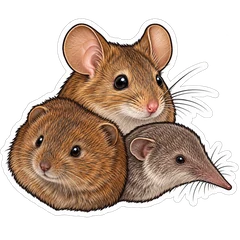 Small mammals & prey
6 steps · Kit needed
Run ✓