
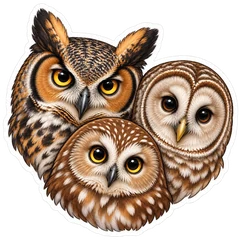
Why Do Baby Owls Look Like Tiny Old Men
Materials: paper, pencils, and 4 stage cards (Down, Pin Feathers, Juvenile Feathers, Flight Feathers)
- Kit needed
- 4 steps
Every spring, the internet rediscovers the same truth: baby owls look like they’ve already paid taxes, yelled at a cloud, and have strong opinions about “kids these days.”
Activity: “Fluff to Flight” Timeline
Goal: Help students connect appearance to function.
Materials: paper, pencils, and 4 stage cards (Down, Pin Feathers, Juvenile Feathers, Flight Feathers)
This turns “why does it look like that” into real-life biology.
Where it comes from
It’s not just you. Owlets really do have that awkward, grumpy-grandpa vibe and there’s an actual biological reason for it.
What you’re seeing is not “ugly-cute.” It’s a perfectly timed survival phase: the fluff stage.
Read the blog post ↗ Why Do Baby Owls Look Like Tiny Old Men · 2026-04-21
Workspace
Run it with your class
Set up the class, count what needs counting, write down what happened, then save it and take it with you. Everything here stays in this browser until you download it.
The class
Counters
Results table
Notes as you go
Activities like this one
Would This Owl Stay? Resource Map
Give students a simple map of a farm, park, forest edge, or schoolyard. Add summer resource cards and let them decide whether an owl would likely stay, shift, or leave.
 Owls
5 steps · Kit needed
Run ✓
Owl School Report Cards
This activity turns back-to-school energy into animal development science.
Owls
1 steps · Kit needed
Run ✓
Owl Eye Color Time Lab
Turn the classroom into a mini wildlife investigation lab. Instead of simply sorting owl photos by eye color, students become field biologists trying to predict when each owl hunts.
Owls
Print & go
Run ✓