
Pellet Data Detective Lab (Graph + CER + Food Web)
Claim: What type of habitat does this owl hunt near? Evidence: Use at least 3 prey categories to support your claim. Reasoning: Explain how each prey type connects to habitat features (cover, edges,…
- No prep
Part A: Build the class graph
- Put the categories on the board: Voles, Mice, Rats, Birds, Shrews, Moles, Insects & Other
- Students build a bar graph from the counts.
- Add one sentence under the graph:
“What prey category dominates, and what might that suggest about the habitat?”
Part B: CER (Claim, Evidence, Reasoning)
Claim: What type of habitat does this owl hunt near?
Evidence: Use at least 3 prey categories to support your claim.
Reasoning: Explain how each prey type connects to habitat features (cover, edges, human structures, underground soil systems).
Part C: Build the food web (the “connect everything” move)
Start with plants/seeds/insects → small mammals → barn owl.
Then ask: Where does snow, grass cover, and edge habitat fit into this web?
Questions to ask
- Where does snow, grass cover, and edge habitat fit into this web?
Where it comes from
Winter (and early spring) has a funny way of turning the outdoors into a science lab. You don’t need a microscope. You don’t need a fancy field station.
Sometimes you just need a pellet.
In a study with Kim Regier, EdD (Department of Integrative Biology) at the University of Colorado Denver, students have been collecting data from barn owl pellets from OBDK since 2020. After 453 pellets dissected, here’s what showed up as the top prey categories:
Read the blog post ↗ What 453 Owl Pellets Can Tell Us About a Habitat · 2026-01-21
Workspace
Run it with your class
Set up the class, count what needs counting, write down what happened, then save it and take it with you. Everything here stays in this browser until you download it.
The class
Counters
Results table
Notes as you go
This activity has no numbered steps, so use the notes box.
Answers to the questions
Activities like this one
Map the Menu
Bonus: Ask students to include a “confidence level” (high/medium/low) and explain what additional evidence they’d want.
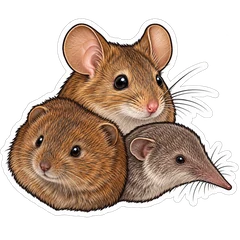 Small mammals & prey
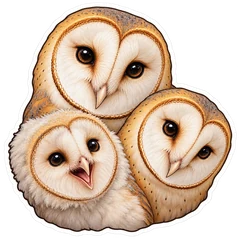 Barn owls
No prep
Run ✓
Summer Picnic Reverse Pellet Lab
This activity turns owl pellets into a playful summer food-web mystery. The twist? Students are not just asking, “What did the barn owl eat?” They are also building the “Nope, Not Dinner” side of the…
Barn owlsSmall mammals & prey
3 steps · Kit needed
Run ✓
Pellet Seasonality: What’s on the Menu Changes With the Weather
Big idea: You don’t need a pellet labeled “winter” to teach winter ecology. You need students to practice the real scientific move: compare patterns and propose explanations.
Small mammals & preyBarn owls
5 steps · Kit needed
Run ✓